
Start Date: 01.06.2025
End Date: 12.06.2025
Render Engine: Blender 5.0 - Cycles
Modeling Software: Solidworks 2025 + Blender Geo Nodes
A dining chair that is lightweight, memorable, and remarkable.
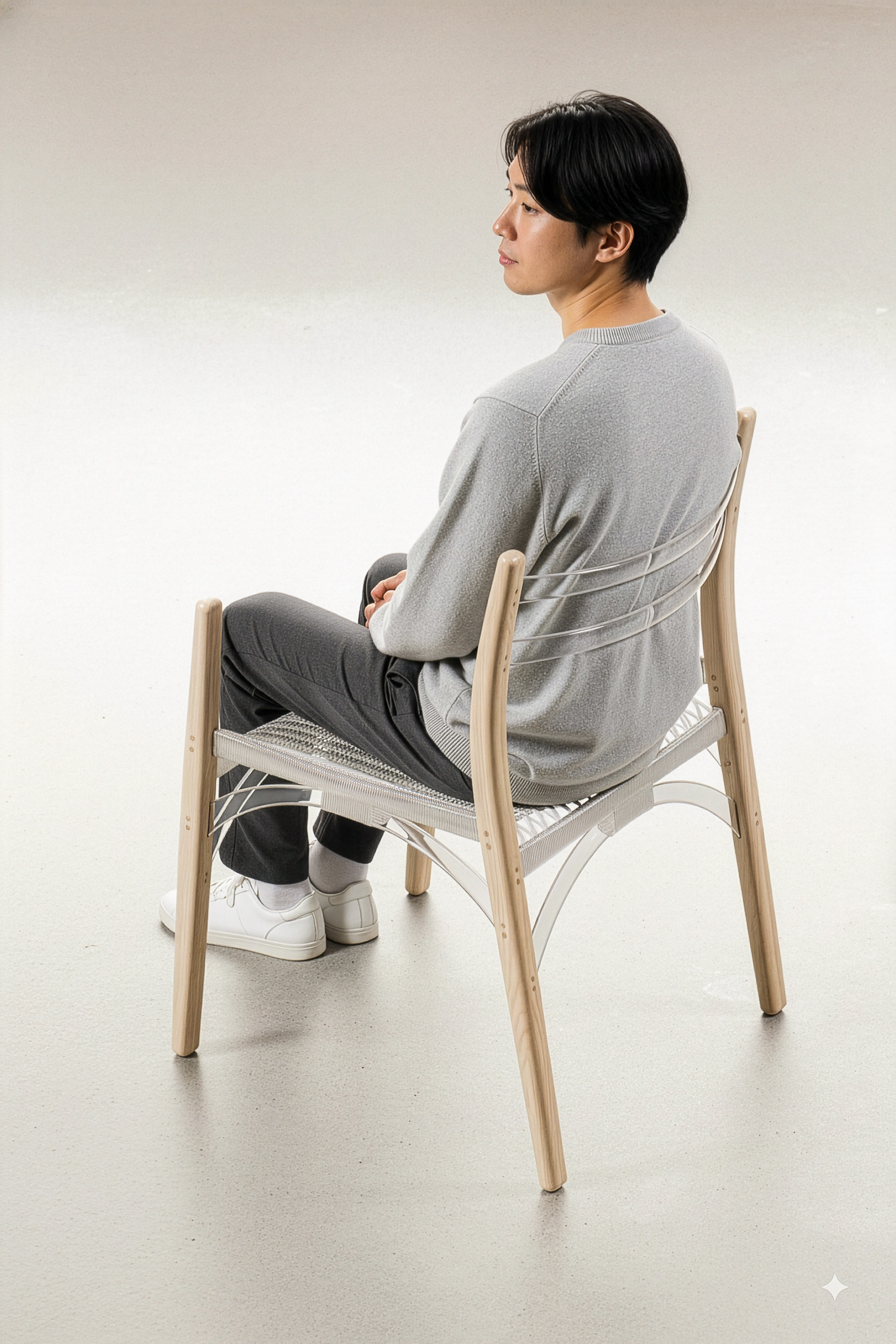
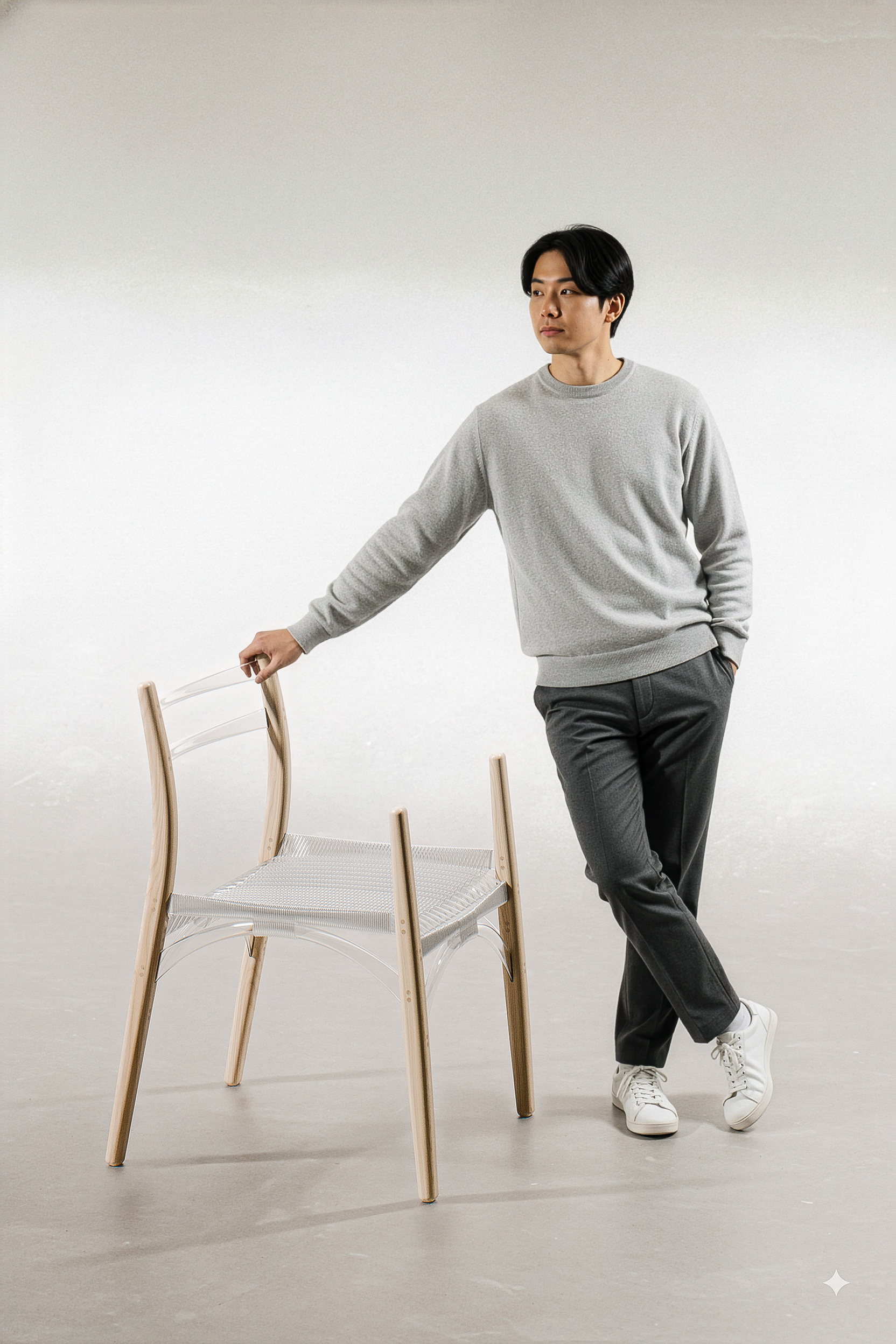
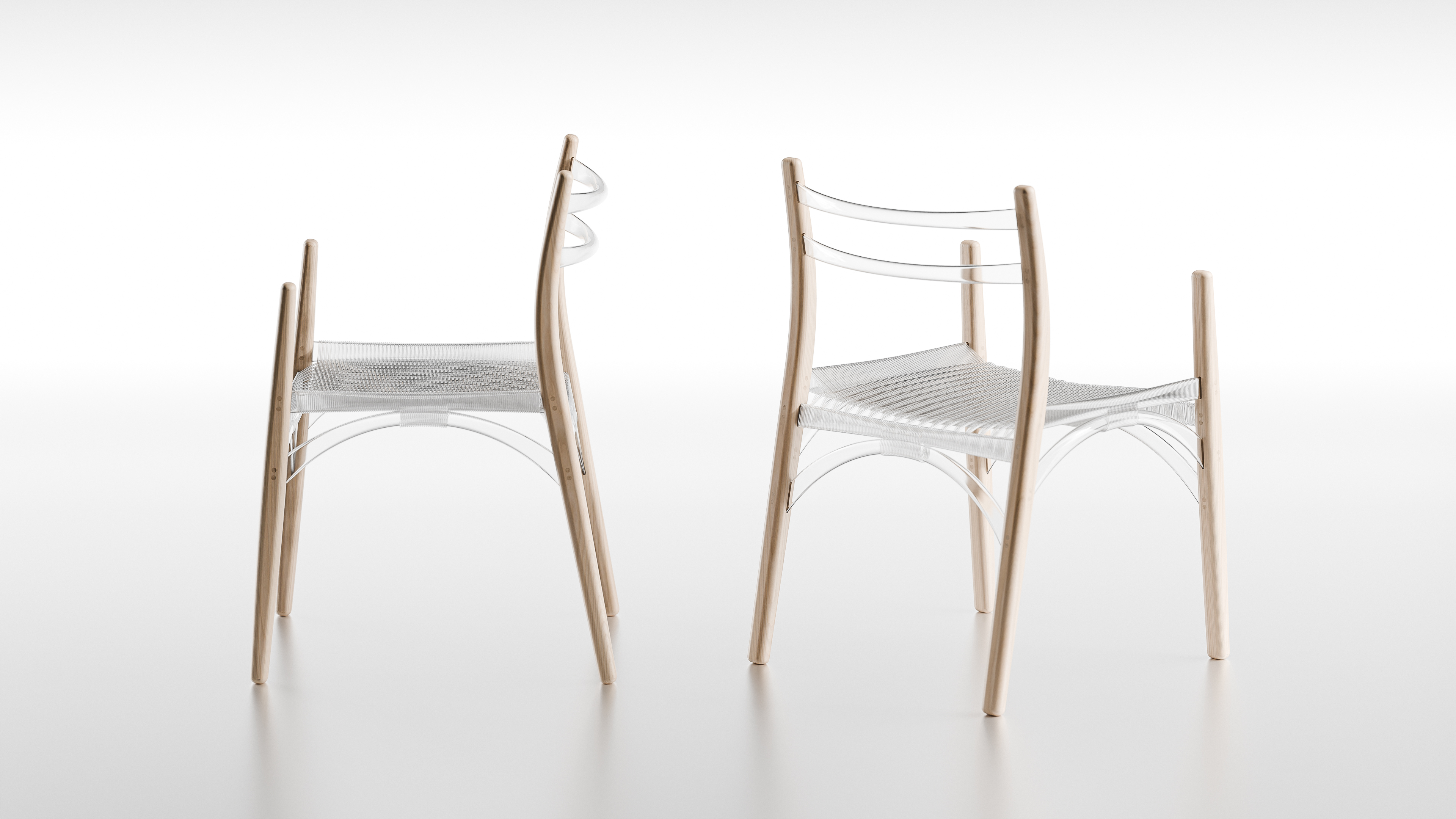
The Simplified Armchair is an exploration of a single concept, lightweight, a theme that revealed itself in a multifaceted way as the project progressed. Lightweight became both a visual pursuit and a literal goal.
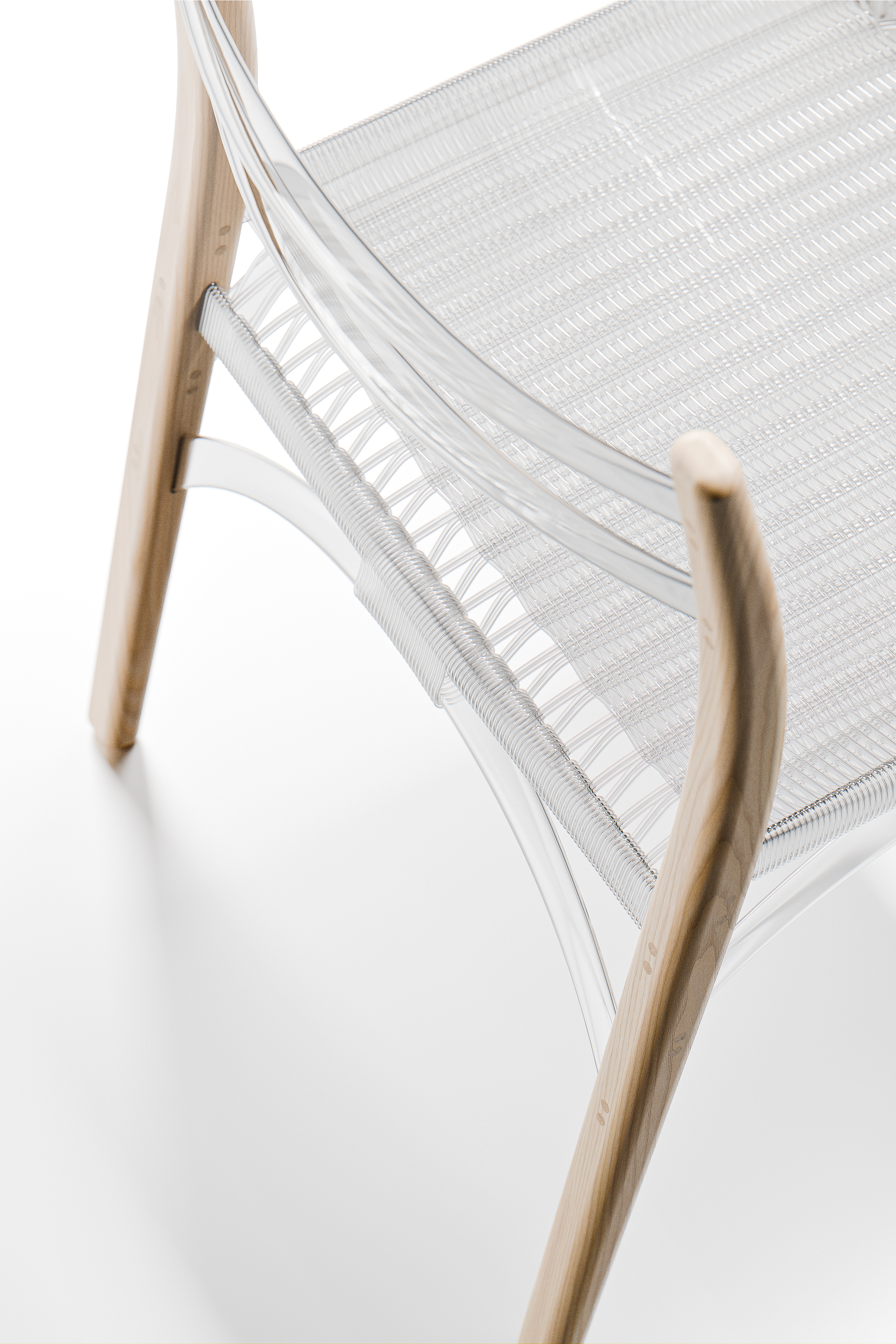
In the literal pursuit of lightweight, the armchair was deliberately pared back without sacrificing utility. The design omits traditional armrests entirely. In their place, it offers a reduced gesture; simple handholds, that reference the idea of an armrest without fully becoming one. This invites the question: Where does an armchair diverge from a chair? The Simplified Armchair sits confidently at that threshold. This approach resulted in a final product weight of 11.6 pounds, a modest but meaningful confirmation of the design intent.
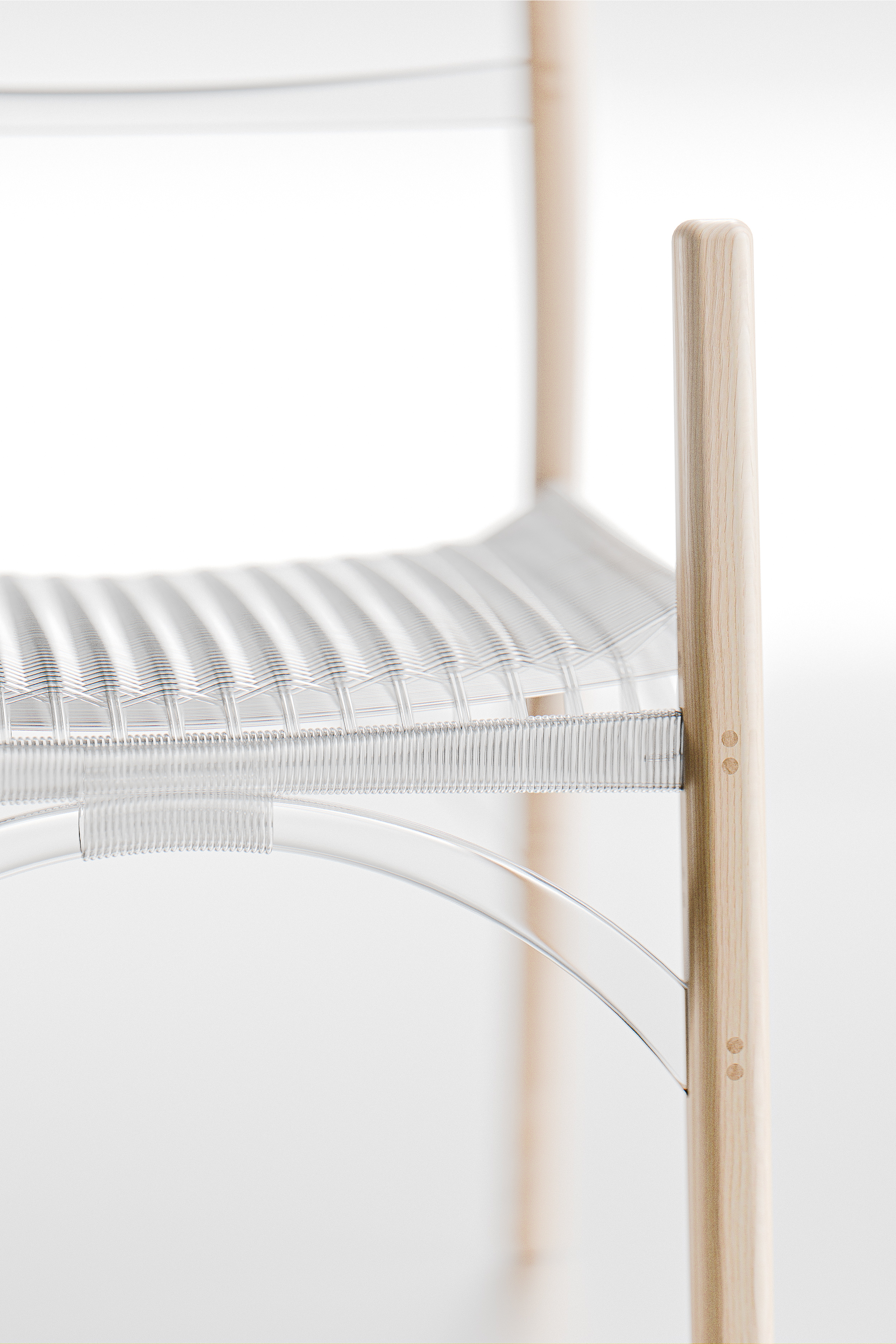
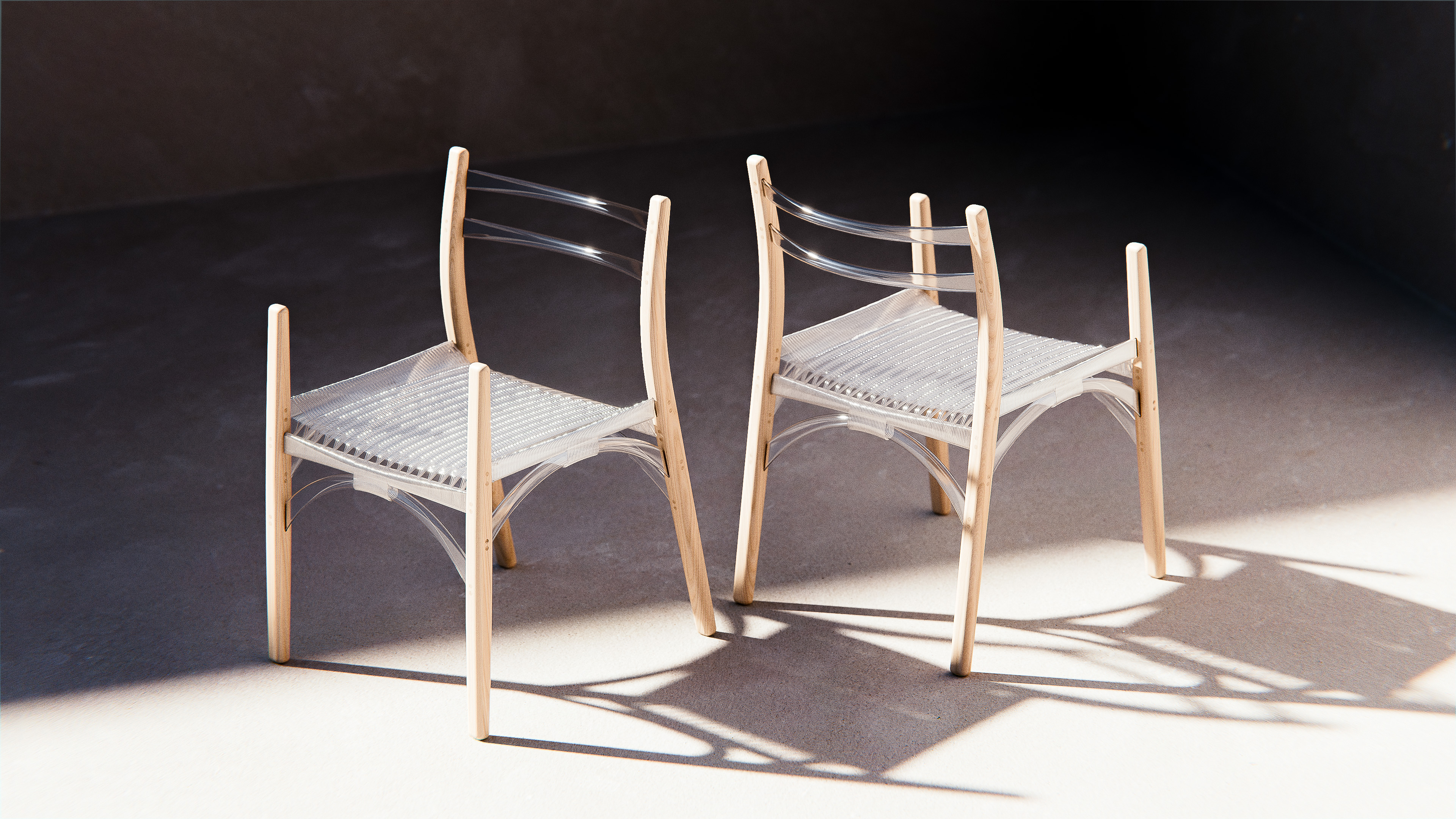
Visually, the project realizes the concept of lightweight far more dramatically. The chair is composed of four ash pillars joined by clear PETG tubing in a way that feels both surprising and exacting. The PETG tubes forming the seat frame are thermoformed into shape, their ends crimped and set into clean mortises, bonded with a specialty 3M adhesive and cross-pinned with oak dowels for strength and permanence.
The seat weave closely echoes the pattern of Takuma Fujikawa’s JP16 Chair, though here the material is entirely reimagined: thin, transparent PVC tubing replaces traditional paper cord, further advancing the chair’s visual lightness.
The resulting effect of these material choices and construction methods is undeniably striking. The construction appears almost impossible; which is intentional. Depending on the light and angle, large portions of the chair visually dissolve, leaving only the softly contoured, finely finished ash standing in quiet contrast. The Simplified Armchair becomes, in essence, a study in how much can be removed while still creating something whole.
A note about the design philosophy.
Like me, you may ask: Is any of this functional? Or is it all aesthetic? And is any of it truly new?
At first glance, the answer seems obvious, it is not functional in the traditional, ergonomic sense.
But it is functional in the intellectual, perceptual, and typological sense.
This design can be understood in four dimensions:
1. It interrogates a typology.
It asks, What is an armchair? What remains when armrests are reduced to their barest gesture?
2. It uses materials to shape perception, not just appearance.
Clear tubing challenges intuition about what carries weight and creates an opportunity for the wood to feel more precious in contrast.
3. It explores the boundary between visual and physical lightness.
What makes an object look light; and does that appearance influence how we understand its actual mass? Can visual lightness compensate for physical weight?
4. Its construction is both narrative and experiment.
Through thermoforming, precise mortising, and no small amount of trial and error, the chair both challenges and participates in traditional joinery norms.